


F.A.Q.
Frequently Asked Questions
Where are your baskets made?
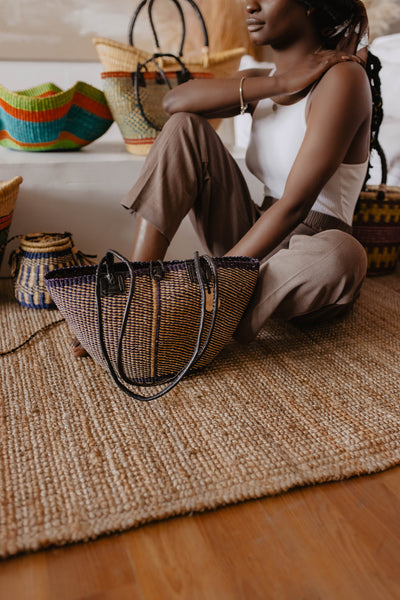
Our baskets are handwoven in Bolgatanga, Ghana, in the northern region near the border of Burkina Faso.
Basket weaving in this area began as a way to create income during the farming off-season and has developed into a highly skilled and recognizable craft. Bolga baskets are known for their strength, structure, and distinctive weaving style.
As demand has grown, similar baskets have appeared from other regions. Once you’re familiar with a true Bolga basket, the difference in quality and construction is clear.
What are the baskets made of?
Our baskets are made from elephant grass, a strong, durable natural fibre that grows in northern Ghana.
Historically, this grass was so abundant it was considered a nuisance. Basket weaving evolved as a way to make use of this natural resource.
Today, due to environmental changes, elephant grass is less readily available in some areas and is sometimes sourced from other regions within the country.
Are the baskets made only by women?
Basket weaving is traditionally done by women in the region, though not exclusively.
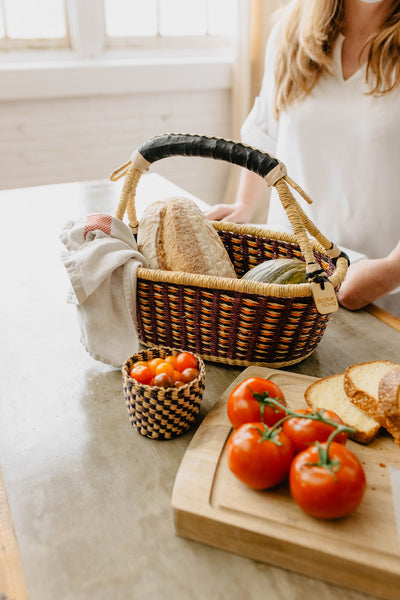
The leather handles are added separately by men who specialize in leatherwork. This division of skills is part of the traditional production process.
How are the weavers compensated?
We work directly with our weaving partners and pay fair market prices for every basket.
In addition, we support initiatives in the communities where our partners live, including sanitation and education programs.
What are the handles made of?
The handles are made from goat leather.
Goats are commonly raised in Ghana as a food source, and the leather is a natural byproduct. Nothing is wasted, and the material is both durable and culturally traditional.
Do you offer a vegan option?
At this time, we do not offer a vegan alternative.
We have not found a material that provides the same durability and respects the traditional design of the baskets.